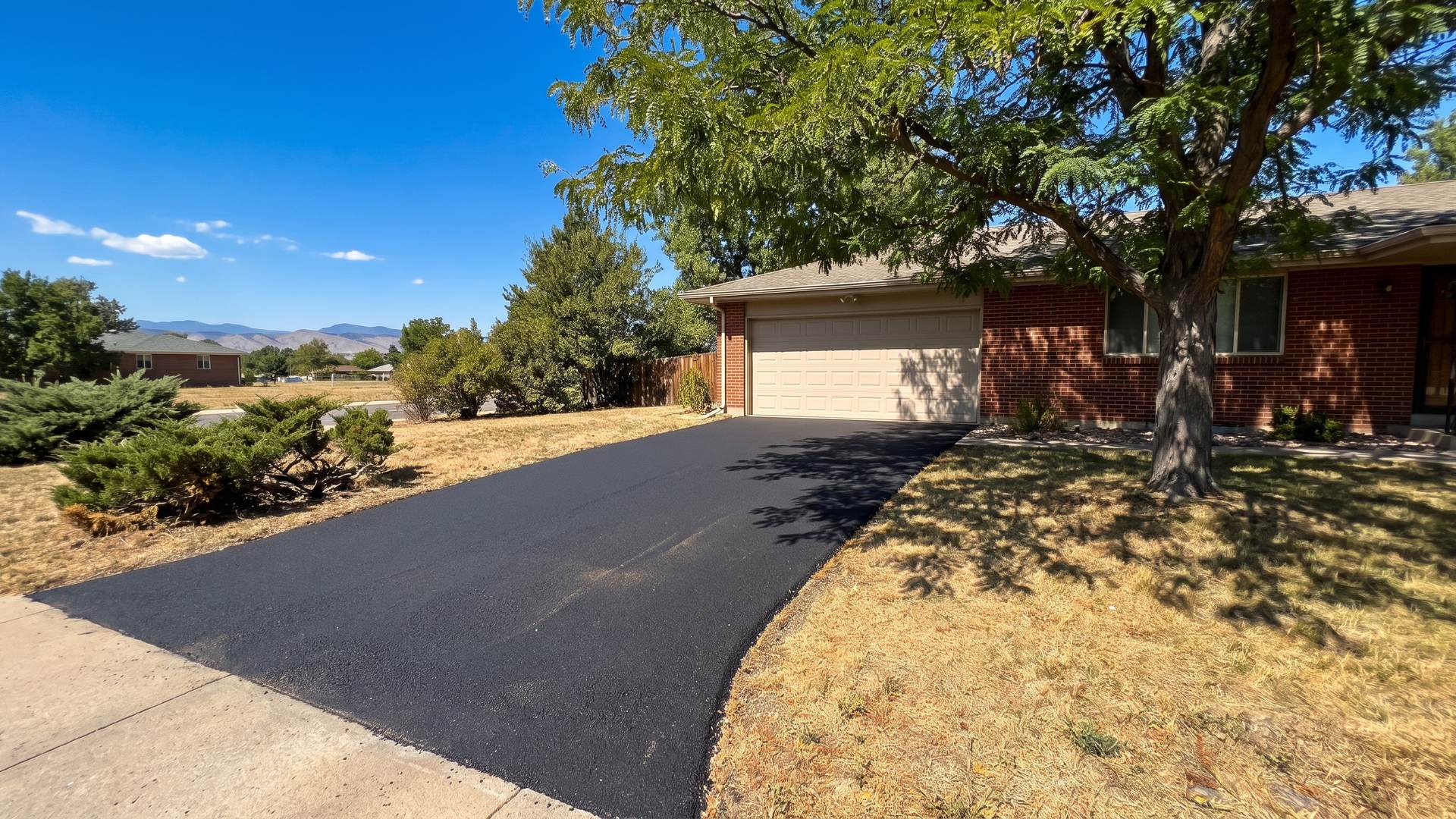
Lakewood Asphalt Sealcoating and Driveway Care
Lakewood incorporated in 1969, first under the name Jefferson City, after Denver's annexations to the west earlier that decade pushed Jefferson County communities to organize, and it became Colorado's third-largest city at incorporation. The name goes back much further, to an 1889 streetcar subdivision platted by W.A.H. Loveland, Miranda Loveland and Charles Welch. About a third of the city's homes are older than the city itself. The 2020 census counted 155,984 residents on 43.47 square miles, fifth in the state.
Housing age tells the pavement story. The median year built is 1977, and nearly 40 percent of units date from the 1960s and 1970s; the population doubled in the first of those decades alone, from about 45,000 in 1962 to 94,000 by 1969. A driveway laid with one of those houses and never replaced has been through five decades of sun and freeze-thaw. Detached single-family homes make up 46.1 percent of units, and the apartments and condominiums in much of the rest bring parking lots that need their own sealing and striping cycles.
free quotes, fast response, local pros.
Free quote
Hail, foothills geology and permits in Lakewood
Lakewood was among the hardest-hit places in the costliest hailstorm in Colorado records. On May 8, 2017, golf-ball- and egg-sized hail fell on the city and on neighboring Wheat Ridge, where one stone measured 2.75 inches, and the storm produced more than 100,000 homeowner insurance claims across the metro. Roof replacements after a storm like that bring dumpsters and heavy trucks onto driveways for days at a time. Haulers commonly ask for plywood under a roll-off, because the weight concentrated on narrow rails and small wheels can dent and scrape asphalt, particularly in warm weather.
Geology changes toward the foothills. Jefferson County regulates a Designated Dipping Bedrock Area along the hogback to the west, where steeply tilted, swelling bedrock has pushed up ridges as tall as two feet under roads and lightly loaded buildings, typically within ten years of development. Swelling clay also causes humped and cracked pavement well beyond that zone. Inside city limits, the municipal code requires a right-of-way permit before anyone alters, repairs, removes or excavates an improvement in the public right-of-way, a rule that reaches any work on a driveway apron at the curb.
See Lakewood, CO on Google Maps — we cover the whole area from Denver.
Asphalt Sealcoating Services Available in Lakewood
Work available to Lakewood property owners through the quote form:
See the full pricing guide for typical ranges.
Lakewood FAQs
Should a Lakewood driveway be checked after a hailstorm?
Yes, mostly for what the cleanup does to it. Hail large enough to wreck roofs, like the golf-ball-sized stones of May 2017, brings dumpsters, shingle deliveries and crew trucks that can sit on a driveway for days. Look for dents under dumpster rails, scuffs from turning tires and fresh cracks near the street edge, and fill any open cracks before winter. If the storm arrived within a day of new sealer, the coat may need a touch-up.
Does Lakewood require a permit to replace a driveway apron?
Work inside the public right-of-way does. The city code requires a right-of-way permit before anyone alters, constructs, repairs, removes or excavates an improvement in that strip, and the apron where a driveway meets the street generally sits within it. Sealing or resurfacing a private driveway behind the property line does not touch the right-of-way. A contractor replacing or widening an apron should pull the permit and show it before work starts.
Does the county dipping-bedrock rule cover a driveway near the hogback?
Not directly. It is a Jefferson County development regulation tied to a mapped zone along the hogback, and it targets foundations: inhabited buildings there need at least ten feet of soil or structural fill beneath them. A driveway is not held to that requirement, but the ground movement behind the rule is the same kind that lifts roads. Anyone near the foothills who sees long, parallel ridges in pavement should get a soils opinion before repaving.
Get Your Free Lakewood Quote
Free quote